Foster Family Care for the Retarded: Management Concerns of the Caretaker
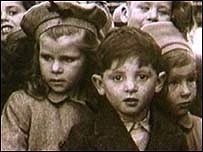
Foster care is a arrangement in which a small has been placed into a ward, group home (residential child care community, treatment center, etc.), or individual home of a state-certified caregiver, referred to as a "foster parent" or with a family member approved past the country. The placement of the child is normally arranged through the authorities or a social service agency. The institution, group dwelling house, or foster parent is compensated for expenses unless with a family member. In some states, relative or "Kinship" caregivers of children who are wards of the land are provided with a financial stipend.
The country, via the family court and child protective services bureau, stand in loco parentis to the modest, making all legal decisions while the foster parent is responsible for the 24-hour interval-to-solar day care of the pocket-sized.
Foster intendance is correlated with a range of negative outcomes compared to the general population. Children in foster care suffer a high charge per unit of sick health, specially psychiatric weather condition such as feet, low, and eating disorders. Ane third of foster children in a US study reported abuse from a foster parent or other adult in the foster home. Nearly half of foster children in the US become homeless when they reach the historic period of 18, and the poverty rate is three times college amongst foster care alumni than in the general population.
Past country [edit]
Australia [edit]
In Commonwealth of australia foster care was known as "boarding-out". Foster care had its early on stages in South Australia in 1867 and stretched to the second one-half of the 19th century. Information technology is said that the arrangement was mostly run by women until the early 20th century. Then the control was centered in many state children's departments. "Although boarding-out was besides implemented past non-regime[al] child rescue organizations, many large institutions remained. These institutions assumed an increasing importance from the late 1920s when the system went into decline." The system was re-energized in the postwar era, and in the 1970s. The system is still the main structure for "out-of-home intendance." The arrangement took intendance of both local and foreign children. "The first adoption legislation was passed in Western Australia in 1896, merely the remaining states did not human action until the 1920s, introducing the beginnings of the airtight adoption that reached it peak in the period 1940–1975. New baby adoption dropped dramatically from the mid-1970s, with the greater tolerance of and support for single mothers".[1]
Cambodia [edit]
Foster care in Cambodia is relatively new equally an official do within the regime. Even so, despite a later start, the practice is currently making great strides within the land. Left with a large number of official and unofficial orphanages from the 1990s, the Cambodian government conducted several inquiry projects in 2006 and 2008, pointing to the overuse of orphanages equally a solution for caring for vulnerable children within the country. Most notably, the studies establish that the per centum of children within orphanages that had parents approached 80%. At the same time, local NGOs like "Children In Families"[2] began offer express foster intendance services within the country. In the subsequent years, the Cambodian government began implementing policies that required the closure of some orphanages and the implementation of minimum standards for residential care institutions. These actions lead to an increase in the number of NGOs providing foster care placements and helped to set the course for care reform around the state. As of 2015, the Cambodian government is working with UNICEF, USAID, several governments, and many local NGOs in continuing to build the capacity for child protection and foster care within the Kingdom.
Canada [edit]
Foster children in Canada are known as permanent wards, (crown wards in Ontario).[3] A ward is someone, in this case a kid, placed under protection of a legal guardian and are the legal responsibleness of the government. Census information from 2011 counted children in foster intendance for the first time, counting 47,885 children in care. The majority of foster children – 29,590, or about 62 per cent – were aged 14 and nether.[4] The wards remain under the care of the government until they "age out of care." All ties are severed from the government and there is no longer whatever legal responsibility toward the youth. This historic period is dissimilar depending on the province.
Israel [edit]
In Dec 2013, the Israeli Knesset approved a nib co-drafted by the State of israel National Council for the Kid to regulate the rights and obligations of participants in the foster care system in Israel.[5]
Nippon [edit]
The idea of foster care or taking in abased children actually came well-nigh around 1392-1490s in Japan. The foster care organization in Japan is like to the Orphan Trains because Brace idea the children would be better off on farms. The people in Nihon thought the children would exercise better on farms rather than living in the "dusty city." The families would ofttimes send their children to a farm family outside the village and only continue their oldest son. The farm families served equally the foster parents and they were financially rewarded for taking in the younger siblings. "It was considered an honor to be chosen equally foster parents, and selection profoundly depended on the family'southward reputation and status within the village".[6] Around 1895 the foster intendance program became more like the system used in the The states because the Tokyo Metropolitan Constabulary sent children to a hospital where they would be "settled".[7] Problems emerged in this system, such as child corruption, and then the government started phasing it out and "began increasing institutional facilities". In 1948 the Child Welfare Law was passed, increasing official oversight, and creating better atmospheric condition for the children to grow upwards in.[8] [9]
Britain [edit]
In the Great britain, foster intendance and adoption has e'er been an option, "in the sense of taking other people'south children into their homes and looking afterward them on a permanent or temporary basis." Although, nothing about it had a legal foundation, until the 20th century. The United kingdom had "wardship," the family taking in the child had custody by the Chancery Court. Wardship was not used very often considering it did not requite the guardian "parental rights." In the 19th century came a "series of infant farming scandals." At the cease of the 19th century they started calling it "boarding-out" similar they did in Australia. They started placing the children in orphanages and workhouses as well. "The First World War saw an increase in organized adoption through adoption societies and child rescue organizations, and pressure grew for adoption to exist given legal status." The commencement laws based on adoption and foster care were passed in 1926. "The pinnacle number of adoptions was in 1968, since when there has been an enormous decline in adoption in the United Kingdom. The primary reasons for children being adopted in the U.k. had been single mothers giving up their children for adoption and stepparents adopting their new partner'due south children".[ten]
United states [edit]
In the Us, foster care started as a result of the efforts of Charles Loring Brace. "In the mid 19th Century, some thirty,000 homeless or neglected children lived in the New York City streets and slums."[11] Brace took these children off the streets and placed them with families in nigh states in the country. Caryatid believed the children would practise best with a Christian farm family. He did this to save them from "a lifetime of suffering"[12] He sent these children to families by railroad train, which gave the name The Orphan Train Movement. "This lasted from 1853 to the early 1890s 1929? and transported more than 120,000 250,000? children to new lives."[13] When Caryatid died in 1890, his sons took over his work of the Children's Help Society until they retired.[12] The Children's Assistance Society created "a foster intendance approach that became the basis for the federal Adoption and Safe Families Deed of 1997" called Concurrent Planning. This profoundly impacted the foster care arrangement.
From August 1999 - August 2019, ix,073,607 American children have been removed from their families and placed in foster homes according to the federal government Adoption and Foster Care Assay and Reporting System.[14]
As final reported in Baronial 2019, 437,238 children nationally were removed from their families and placed in foster homes co-ordinate to the federal government Adoption and Foster Intendance Assay and Reporting System.[14]
- 24% of foster children are between the ages of 0 and ii[14]
- xviii% of foster children are betwixt the ages of 3 and 5[fourteen]
- 28% of foster children are between the ages of 6 and 12[xiv]
- 40% of foster children are between the ages of 13 and 21[14]
- Boilerplate # of birthdays a child spends in foster intendance: 2 [14]
- 22% of children had three or more placements during a length of 20 months in foster care.[xiv]
- 91% of foster children under the historic period of 2 are adopted.[14]
France [edit]
In French republic, foster families are called familles d'accueil (literally "welcome families"). Foster homes must obtain an official approval[15] from the government in order to welcome a minor or an elderly person. In order to receive this blessing they must follow a training and their home is inspected to be sure it is safe and healthy. In 2017, 344 000 minors[xvi] and 15000 elderly persons[17] were welcomed in foster homes.
Placement [edit]
Family-based foster care is mostly preferred to other forms of out of habitation care.[18] Foster care is intended to exist a short-term solution until a permanent placement tin can be made.[19] In most states, the primary objective is to reconcile children with the biological parents. However, if the parents are unable or unwilling to care for the child, or if the child is an orphan, then the first option of adoptive parents is a relative such equally an aunt, uncle or grandparent, known as kinship care. Most kinship care is done informally, without the interest of a court or public system. Notwithstanding, in the Usa, formal kinship care is increasingly common. In 2012, a quarter of all children in formal foster intendance were placed with relatives instead of being placed into the organization.[20]
If no related family member is willing or able to adopt, the adjacent preference is for the child to be adopted by the foster parents or by someone else involved in the child's life (such every bit a teacher or jitney). This is to maintain continuity in the child'south life. If neither above option are available, the child may be adopted by someone who is a stranger to the child.
If none of these options are feasible, the program for the minor may be to enter OPPLA (Other Planned Permanent Living Arrangement). This pick allows the child to stay in custody of the country and the child can stay placed in a foster dwelling, with a relative or a long-term intendance facility, such as a residential kid care community or, for children with development disabilities, physical disabilities or mental disabilities, a handling center.
671,000 children were served by the foster intendance arrangement in the Us in 2015.[21] "After failing more than 20 percent between FY 2006 and FY 2012 to a low of 397,000, the number of children in foster care on the terminal day of the fiscal year increased to 428,000 in FY 2015, with a slightly higher percent change from 2014 to 2015 (3.three%) than observed from 2013 to 2014 (3.2%)."[22] Since FY 2012, the number of children in foster care at the stop of each FY has steadily increased.[21]
The median amount of time a child spent in foster care in the U.S. in 2015 was thirteen.5 months.[23] That year, 74% of children spent less than two years in foster care, while xiii% were in care for three or more than years.[24] Of the estimated 427,910 children in foster care on September 30, 2015: 43 percent were White, 24 percent were African-American, 21 pct were Hispanic (of any race), ten percent were other races or multiracial, and ii percent were unknown or unable to be determined.[24]
Children may enter foster care voluntarily or involuntarily. Voluntary placement may occur when a biological parent or lawful guardian is unable to care for a kid. Involuntary placement occurs when a child is removed from their biological parent or lawful guardian due to the risk or actual occurrence of physical or psychological harm, or if the child has been orphaned. In the United states, nigh children enter foster care due to neglect.[25] If a biological parent or legal guardian is unwilling to care for a child, the kid is deemed to exist dependent and is placed under the intendance of the child protection agency. The policies regarding foster care too as the criteria to exist met in order to become a foster parent vary co-ordinate to legal jurisdiction.
Specially egregious failures of kid protective services often serve equally a catalyst for increased removal of children from the homes of biological parents. An example is the savage torture and murder of 17-month-former Peter Connelly, a British toddler who died in London Borough of Haringey, North London after suffering more than than 50 severe injuries over an eight-month menstruation, including eight broken ribs and a broken back. Throughout the menstruation of time in which he was being tortured, he was repeatedly seen by Haringey Children's services and NHS health professionals.[26] Haringey Children's services already failed ten years earlier in the example of Victoria Climbié.[27] In the time since his death, in 2007, cases have reached a record charge per unit in England surpassing x,000 in the reporting year catastrophe in March 2012.
Abuse and negligence [edit]
From 1993 through 2002 there were 107 recorded deaths[ clarification needed ] [ who? ]; there are approximately 400,000 children in out-of-home intendance, in the U.s.. Almost x% of children in foster care have stayed in foster care for five or more than years. Nearly half of all children in foster intendance take chronic medical problems. 8% of all children in foster intendance have serious emotional problems, 11% of children exiting foster care aged out of the system, in 2011.[28] [ failed verification ] Children in foster intendance experience high rates of child corruption, emotional impecuniousness, and physical neglect. In one written report in the U.k. "foster children were seven–8 times, and children in residential care 6 times more likely to be assessed by a pediatrician for abuse than a child in the full general population".[29] A written report of foster children in Oregon and Washington Land institute that nearly one third reported being driveling by a foster parent or another adult in a foster home.[xxx]
Development [edit]
As of 2019, the majority of children in the foster care system were nether 8 years of age.[31] These early years are quite of import for the concrete and mental development of children. More specifically, these early on years are virtually of import for encephalon evolution. Stressful and traumatic experiences have been found to have long-term negative consequences for the brain development in children whereas talking, singing, and playing can assist encourage encephalon growth.[32] Since the majority of children are removed from their homes due to neglect, this means that many of these children did non experience stable and stimulating environments to aid promote this necessary growth.[31] In a research study conducted at the University of Minnesota, researchers found that children placed in not-parental homes, such as foster homes, showed significant behavior problems and higher levels of internalizing problems in comparing to children in traditional families and even children who were mistreated past caregivers.[33]
Medical and psychiatric disorders [edit]
A higher prevalence of physical, psychological, cognitive and epigenetic disorders for children in foster care has been established in studies in various countries. The Casey Family Programs Northwest Foster Care Alumni Study was a fairly extensive written report of various aspects of children who had been in foster care. Individuals who were in foster care experience higher rates of physical and psychiatric morbidity than the full general population and suffer from not existence able to trust and that can atomic number 82 to placements breaking down.[34]
In the Casey written report of foster children in Oregon and Washington country, they were found to accept double the incidence of depression, 20% every bit compared to 10% and were plant to have a higher rate of posttraumatic stress disorder (PTSD) than gainsay veterans with 25% of those studied having PTSD. Children in foster care take a higher probability of having attention deficit hyperactivity disorder (ADHD), and deficits in executive performance, feet also as other developmental problems.[35] [36] [37] [38]
These children experience higher degrees of incarceration, poverty, homelessness, and suicide. Studies in the U.S. have suggested that some foster care placements may be more detrimental to children than remaining in a troubled habitation,[39] simply a more recent written report suggested that these findings may have been affected by selection bias, and that foster care has trivial effect on behavioral problems.[40]
Neurodevelopment [edit]
Foster children have elevated levels of cortisol, a stress hormone, in comparison to children raised by their biological parents. Elevated cortisol levels can compromise the immune organisation. (Harden BJ, 2004).[41] Most of the processes involved in good for you neurodevelopment are predicated upon the establishment of close nurturing relationships and environmental stimulation. Negative environmental influences during this critical period of brain evolution can take lifelong consequences.[42] [43] [44] [45]
Mail service traumatic stress disorder [edit]
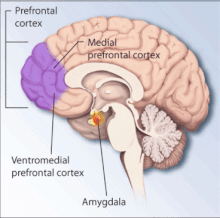
Regions of the brain associated with stress and posttraumatic stress disorder[46]
Children in foster care take a college incidence of posttraumatic stress disorder (PTSD). In ane study,[47] 60% of children in foster care who had experienced sexual abuse had PTSD, and 42% of those who had been physically abused met the PTSD criteria. PTSD was likewise found in 18% of the children who were not abused. These children may have developed PTSD due to witnessing violence in the domicile. (Marsenich, 2002).
In a study conducted in Oregon and Washington state, the rate of PTSD in adults who were in foster treat one year between the ages of 14–18 was found to exist higher than that of combat veterans, with 25 percent of those in the study meeting the diagnostic criteria as compared to 12–13 pct of Republic of iraq war veterans and 15 percent of Vietnam war veterans, and a charge per unit of 4% in the general population. The recovery rate for foster home alumni was 28.2% equally opposed to 47% in the general population.
"More than half the study participants reported clinical levels of mental illness, compared to less than a quarter of the general population".[48] [49]
Eating disorders [edit]
Foster children are at increased adventure for a multifariousness of eating disorders in comparing to the general population. In a study done in the United Kingdom, 35% of foster children experienced an increase in Body Mass Index (BMI) once in care.[50] Food Maintenance Syndrome is characterized by a prepare of aberrant eating behaviors of children in foster care. It is "a pattern of excessive eating and food acquisition and maintenance behaviors without concurrent obesity"; it resembles "the behavioral correlates of Hyperphagic Curt Stature". It is hypothesized that this syndrome is triggered by the stress and maltreatment foster children are subjected to, it was prevalent amongst 25 per centum of the report grouping in New Zealand.[36] Bulimia nervosa is seven times more prevalent among former foster children than in the full general population.[51]
Poverty and homelessness [edit]
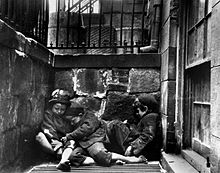
New York street children in 1890
Virtually half of foster children in the U.S. become homeless when they plough 18.[52] One of every 10 foster children stays in foster care longer than seven years, and each year about 15,000 reach the age of majority and leave foster care without a permanent family unit—many to join the ranks of the homeless or to commit crimes and be imprisoned.[53] [54]
Iii out of 10 of the United States homeless are quondam foster children.[55] Co-ordinate to the results of the Casey Family Study of Foster Care Alumni, up to fourscore pct are doing poorly—with a quarter to a third of former foster children at or beneath the poverty line, iii times the national poverty rate.[56] Very frequently, people who are homeless had multiple placements every bit children: some were in foster care, but others experienced "unofficial" placements in the homes of family or friends.
Individuals with a history of foster intendance tend to become homeless at an earlier historic period than those who were not in foster care.[ citation needed ] The length of time a person remains homeless is longer in individuals who were in foster care.[57]
Suicide-death rate [edit]
Children in foster care are at a greater chance of suicide.[58] The increased adventure of suicide is still prevalent later on leaving foster care. In a modest study of xx-ii Texan youths who anile out of the organization, 23 pct had a history of suicide attempts.[59]
A Swedish report utilizing the data of almost one million people including 22,305 former foster children who had been in care prior to their teens, concluded:
Former kid welfare clients were in year of nascence and sex activity standardised take a chance ratios (RRs) four to five times more than likely than peers in the general population to have been hospitalised for suicide attempts....Individuals who had been in long-term foster care tended to take the virtually dismal outcome...former child welfare/protection clients should be considered a high-risk group for suicide attempts and severe psychiatric morbidity.[60]
Death rate [edit]
Children in foster intendance have an overall higher bloodshed charge per unit than children in the general population.[61] A study conducted in Finland among current and former foster children upward to age 24 found a higher mortality rate due to substance abuse, accidents, suicide and illness. The deaths due to affliction were attributed to an increased incidence of acute and chronic medical weather and developmental delays among children in foster care.[62]
Georgia Senator Nancy Schaefer published a report "The Decadent Business organization of Child Protective Services"[63] stating:
"The National Center on Kid Abuse and Neglect in 1998 reported that six times as many children died in foster care than in the full general public and that once removed to official "safety", these children are far more probable to suffer abuse, including sexual molestation than in the full general population".[63]
Academic prospects [edit]
Educational outcomes of ex-foster children in the Northwest Alumni Written report:[64]
- 56% completed high school compared to 82% of the general population, although an additional 29% of former foster children received a G.Due east.D. compared to an additional v% of the full general population.
- 42.7% completed some didactics across high school.
- 20.half dozen% completed any degree or document beyond loftier schoolhouse
- xvi.1% completed a vocational caste; 21.9% for those over 25.
- 1.eight% consummate a bachelor'due south caste, 2.7% for over 25, the completion rate for the general population in the same historic period grouping is 24%, a sizable difference.
The study reviewed case records for 659 foster care alumni in Northwest United states of america, and interviewed 479 of them between September 2000 and January 2002.[64]
Higher Education [edit]
Approximately 10% of foster youth brand information technology to higher and of those 10%, only almost three% actually graduate and obtain a 4-year degree.[65] Although the number of foster youth who are starting at a 4-year university after loftier schoolhouse has increased over the years, the number of youth who graduate from higher continues to remain stable. A report of 712 youth in California, the results revealed that foster intendance youth are fives times less likely to attend college than youth who do not go through foster care.[66] There are different resources that offer both financial and emotional support for foster youth to keep their instruction. Simultaneously, there are also many barriers that make getting to a college or university difficult.
Borton describes some of the barriers youth face in her article, Barriers to Mail service-Secondary Enrollment for Former Foster Youth. A few of those barriers include financial hurdles, navigating through the application procedure with little to no support, and lack of housing.[67]
Many studies have shown that there are a few factors that have seemingly played a part in the success of foster youth making it to and graduating from a college or university. While having financial resources for foster youth is a huge aid, at that place are other components to look at. Beginning with having back up for these youth at the high schoolhouse level. In order for foster youth to obtain a college caste, they must enroll at a university first.
Out of the different factors that play in increasing college enrollment such as youth participating in extended foster care, reading ability, etc., youth who received assist or had supportive relationships from adults, were more probable than youth who did not have supportive relationships, to enroll at a university.[66]
At colleges across the nation, there are programs that are specifically put in place to help youth who take aged out of the foster care system and continued into college instruction. These programs oft help youth financially past giving them supplemental funds and providing back up through peer mentor programs or academic counseling services. While funding is an important key in helping get through college, it hasn't been found equally the only crucial component in aiding a youth's success.
A study done by Jay and colleagues provides insight on what youth view every bit important in helping them thrive on a higher campus. The report, which had a sample of 51 foster youth, used Conceptual Mapping to break downward the different components of support that may be important for youth to receive on a college campus.[68] It is important to have in the different factors that can exist helpful for youth at a university and to expect across providing financial back up.
Psychotropic medication use [edit]
Studies have revealed that youth in foster care covered by Medicaid insurance receive psychotropic medication at a charge per unit that was 3 times higher than that of Medicaid-insured youth who qualify by low family income. In a review (September 2003 to Baronial 2004) of the medical records of 32,135 Texas foster care 0–19 years sometime, 12,189 were prescribed psychotropic medication, resulting in an almanac prevalence of 37.9% of these children being prescribed medication. 41.3% received 3 different classes of these drugs during July 2004, and 15.9% received 4 different classes. The nearly ofttimes used medications were antidepressants (56.8%), attending-deficit/hyperactivity disorder drugs (55.9%), and antipsychotic agents (53.two%). The study too showed that youth in foster care are frequently treated with concomitant psychotropic medication, for which sufficient show regarding safety and effectiveness is not available.[69]
The use of expensive, brand name, patent protected medication was prevalent. In the case of SSRIs the use of the nearly expensive medications was noted to be 74%; in the general market only 28% are for brand proper name SSRI's vs generics. The average out-of-pocket expense per prescription was $34.75 for generics and $90.17 for branded products, a $55.42, deviation.[70]
Therapeutic intervention [edit]
Children in the kid welfare system accept often experienced significant and repeated traumas and having a background in foster homes—especially in instances of sexual corruption—can be the precipitating factor in a wide diverseness of psychological and cognitive deficits[71] it may also serve to obfuscate the truthful crusade of underlying problems. The foster care experience may take goose egg to do with the symptoms, or on the other hand, a disorder may be exacerbated by having a history of foster care and attendant abuses. The homo brain however has been shown to have a fair degree of neuroplasticity.[72] [73] [74] and adult neurogenesis has been shown to exist an ongoing process.[75]
Cross-cultural adoption policies [edit]
George Shanti, Nico Van Oudenhoven, and Ekha Wazir, co-authors of Foster Care Beyond the Crossroads: Lessons from an International Comparative Analysis, say that there are four types of Government foster care systems. The first 1 is that of developing countries. These countries do non accept policies implemented to take care of the basic needs of these children and these children mostly receive assistance from relatives. The second organisation is that of former socialist governments. The historical context of these states has not immune for the development of their foster care system. NGO'southward have urged them to evolve; even so the traditional system of institutionalizing these children is still in identify. Thirdly, liberal democracies do not take the back up from its political arrangement in society to take care of these children, even though they accept the resources. Finally, social democracies are the most advanced governments in regards to their foster care system. These governments have a massive infrastructure, funding, and support arrangement in order to assist foster care children.[76]
Adoption [edit]
Foster care[77] adoption is a blazon of domestic adoption where the child is initially placed into a foster care system and is later on placed for adoption.
Children may be placed into foster care for a variety of reasons; including, removal from the home by a governmental agency because of maltreatment.[78] In some jurisdictions, adoptive parents are licensed as and technically considered foster parents while the adoption is being finalized.[79] According to the U.Southward Department of Health and Human being Services Children'due south Agency, there were approximately 408,425 children in foster care in 2010. Of those children, twenty-five per centum had a goal of adoption. In 2015, 243,060 children exited foster care and twenty-two percent were adopted.[80] Nationwide, there are more than 1 hundred thousand children in the U.South. foster intendance system waiting for permanent families.[81]
Outcomes [edit]
Youth who are aging out of foster care ofttimes confront difficulties in transitioning into adulthood, especially in terms of finding stable housing, employment, finances, and educational opportunities.[82] The suspected reason for these difficulties involves a lack of stability experienced while in the foster intendance arrangement, and the reported abuse and/or neglect in their babyhood, which may affect their ability to cope with significant life changes.[82] In the United States, there are independent living programs designed with the intent to serve the needs of transitioning foster youth.[82] Withal, youth aging out of foster care accept indicated that these programs are failing to fully address the needs of young adults without familial assist.[82]
In a study conducted by Gypen et al. (2017),[82] involving a cross-database analysis of research articles relevant to the outcomes of erstwhile foster youth, they found that the educational, mental wellness, employment, income, stable housing, criminal involvement and substance corruption issues outcomes for youth who have aged out of the foster care organization are substantially poorer than their peers. For example, Gypen et al. (2017),[82] indicated that only 45% of former foster youth received a high schoolhouse diploma, which is 23% lower than the general population. There are also significantly poorer outcomes for children who were formerly in foster intendance than children from low-income households.[82] Children who are eventually adopted by their placement family evidence greater outcomes, in terms of finding stable housing, employment, finances and teaching opportunities, than those who aged out of the foster care system without a permanent placement.[82]
Information technology has as well been reported that erstwhile foster youth take a college risk of ending upwards in prostitution, and even fall prey to sex trafficking.[83] [84] [85] This has also been called the "foster care to prostitution pipeline".[86] a 2012 written report in Los Angeles found that 59% of juveniles arrested for prostitution were or had been in foster intendance, only the generalizability of these findings has been disputed.[87]
U.S. Academic Opposition To Foster Care [edit]
Professor Daniel Hatcher of the Academy of Baltimore, author of "The Poverty Industry: The Exploitation of America'southward Most Vulnerable Citizens" has testified before Congress, the Maryland General Assembly, and in other governmental proceedings regarding several issues affecting children and low-income individuals and families.[88] Hatcher's scholarship has addressed the conflicts betwixt land agencies' acquirement maximization strategies and the agencies' cadre missions to serve low-income children and families—including the practice of state foster care agencies converting foster children's Social Security benefits into state acquirement, Medicaid maximization and diversion practices, welfare price recovery policies in the TANF program, and foster care cost recovery through child support enforcement.
Professor Vivek Sankaran, University of Michigan, is writer of "Rethinking Foster Intendance: Why Our Current Approach to Child Welfare Has Failed"[89] and "A Cure Worse Than the Disease? The Bear upon of Removal on Children and Their Families." Sankaran advocates for the rights of children and parents involved in child welfare proceedings. His work focuses on improving outcomes for children in foster care past empowering their parents and strengthening decision-making processes in juvenile courts. In 2009, Professor Sankaran founded the Detroit Center for Family unit Advancement, the kickoff organization in the land to provide multidisciplinary legal assistance to families to preclude the unnecessary entry of children into foster intendance. In 2011, he was named Michigan's Parent Attorney of the Year.
Professor Dorothy Roberts, University of Pennsylvania, is writer of "Shattered Bonds: The Color Of Child Welfare."[90] Roberts, an acclaimed scholar of race, gender, and the law, joined the University of Pennsylvania as its 14th Penn Integrates Noesis Professor with joint appointments in the Departments of Africana Studies and Sociology and the Law Schoolhouse where she holds the countdown Raymond Footstep and Sadie Tanner Mossell Alexander chair. She is too founding director of the Penn Plan on Race, Science & Order in the Heart for Africana Studies. On July 16, 2020, she wrote the article "Abolishing Policing Also Means Abolishing Family Regulation."[91]
Meet likewise [edit]
- Assisted living
- Attachment theory
- Child abandonment
- Child and family unit services
- Kid and youth care
- Community-based care
- Community integration
- Circuitous post-traumatic stress disorder
- Besiege Care
- Cottage Homes
- Contained living
- Orphan train
- Orphanage
- Reactive attachment disorder
- Residential education
- Substance dependence
- Supported living
- Supported housing
- Teaching-family model
- Family back up
- Wraparound (childcare)
References [edit]
- ^ Boyfriend, Shurlee. "History of Adoption and Fostering in Australia by Shurlee Swain." History of Adoption and Fostering in Australia. Oxford Academy, 28 Jan. 2013. Web. 05 October. 2016.
- ^ [1] [ permanent dead link ]
- ^ Anne Tweddle, "Youth Leaving Intendance Report" Archived 2014-10-21 at the Wayback Machine, September 2005
- ^ National Post,"Census 2011: Canada's foster children counted for outset time", September 19, 2012
- ^ Danielle Ziri (December eight, 2013). "Knesset passes bill regulating foster care system in Israel". The Jerusalem Post. Retrieved July 31, 2015.
- ^ Kumasaka, Y, and H Aiba. "Foster Care in Japan: Past and Present." The Milbank Memorial Fund Quarterly. 46.two (1968): 255. Print.
- ^ Kumasaka, Y, and H Aiba. "Foster Care in Japan: Past and Present." The Milbank Memorial Fund Quarterly. 46.2 (1968): 258. Print.
- ^ Kumasaka, Y, and H Aiba. "Foster Care in Nippon: Past and Present." The Milbank Memorial Fund Quarterly. 46.2 (1968): 259. Print.
- ^ "Nippon: Children in Institutions Denied Family Life". May 2014.
- ^ Keating, Jenny. "History of Adoption and Fostering in the United Kingdom." Oxford Bibliographies. Oxford University, 28 May 2013. Web. 06 Oct. 2013.
- ^ "Foster Intendance History & Accomplishments." The Children's Assistance Guild. N.p., n.d. Web. 05 Oct. 2013.
- ^ a b Nordmark, Oliver. "Orphan Train History." : REVEREND CHARLES LORING BRACE. Northward.p., 09 February. 2010. Spider web. 19 Oct. 2013.
- ^ "Foster Intendance History & Accomplishments." The Children's Aid Guild. N.p., n.d. Spider web. 05 Oct. 2013
- ^ a b c d east f one thousand h i "Adoption & Foster Intendance Statistics". Children's Bureau | ACF . Retrieved 2020-11-xvi .
- ^ "'L'aide et l'activeness sociales en French republic'" (PDF). 2019.
- ^ "Famille d'accueil (Assistant familial)".
- ^ "FAQ".
- ^ Barber, James G.; Delfabbro, Paul H. (2003). Children in Foster Care. New York: Routledge}. pp. 3–4. [ ISBN missing ]
- ^ Dorsey et Al. Current status and evidence base of preparation for foster and treatment foster parents
- ^ "Stepping Upwards for Kids, Annie E. Casey Foundation" (PDF). 2012. Retrieved November ix, 2013.
- ^ a b "Trends in Foster Intendance and Adoption: FY 2006 - FY 2015" (PDF). U.South. Children's Bureau, Administration for Children, Youth and Families. June 8, 2016. Retrieved May 11, 2017.
- ^ "Trends in Foster Care and Adoption: FY 2006 - FY 2015" (PDF). June 8, 2016. Retrieved May eleven, 2017.
- ^ "Foster Intendance Statistics 2015" (PDF). March 1, 2017. Archived from the original (PDF) on 2015-03-08. Retrieved May 11, 2017.
- ^ a b Id.
- ^ "Pew Commission on Children in Foster Care". Pewfostercare.org. Retrieved 2011-11-01 .
- ^ BBC: A short life of misery and pain
- ^ White, Michael (2008-11-12). "Squabble over Baby P was not the Commons at its best". The Guardian. London. Retrieved 2008-11-12 .
- ^ "Foster Care Foacts and Statistics". FCAA. Archived from the original on January 13, 2015. Retrieved March 31, 2013.
- ^ Hobbs, GF; Hobbs, CJ; Wynne, JM (1999). "Abuse of children in foster and resident ial intendance". Kid Corruption & Neglect. 23 (12): 1239–52. doi:10.1016/S0145-2134(99)00096-4. PMID 10626608.
- ^ Pecora, Peter J. (2005-04-06). "Improving Family Foster Care | Casey Family Programs". Casey.org. Retrieved 2011-11-01 .
- ^ a b "The AFCARS Written report" (PDF).
- ^ "Early Encephalon Development and Health". 4 February 2021.
- ^ Lawerence, Catherine R. (2006). "The impact of foster care on development". Evolution and Psychopathology. 18 (1): 57–76. doi:10.1017/S0954579406060044. PMID 16478552. S2CID 1051095.
- ^ McCann, JB; James, A; Wilson, South; Dunn, Yard (1996). "Prevalence of psychiatric disorders in young people in the care organisation". BMJ (Clinical Research Ed.). 313 (7071): 1529–30. doi:10.1136/bmj.313.7071.1529. PMC2353045. PMID 8978231.
- ^ Pears, K; Fisher, PA (2005). "Developmental, cognitive, and neuropsychological functioning in preschool-aged foster children: associations with prior maltreatment and placement history". Journal of Developmental and Behavioral Pediatrics. 26 (2): 112–22. doi:ten.1097/00004703-200504000-00006. PMID 15827462. S2CID 28641807.
- ^ a b Tarren-Sweeney, M; Hazell, P (2006). "Mental health of children in foster and kinship care in New Southward Wales, Commonwealth of australia". Journal of Paediatrics and Child Wellness. 42 (three): 89–97. doi:10.1111/j.1440-1754.2006.00804.ten. PMID 16509906. S2CID 23910822.
- ^ Pecora, PJ; Jensen, PS; Romanelli, LH; Jackson, LJ; Ortiz, A (2009). "Mental health services for children placed in foster care: an overview of electric current challenges". Child Welfare. 88 (1): 5–26. PMC3061347. PMID 19653451.
- ^ Karnik, Niranjan S. (2000). "Foster Children and ADHD: Acrimony, Violence, and Institutional Power". Journal of Medical Humanities. 21 (iv): 199–214. doi:10.1023/A:1009073008365. S2CID 140865450.
- ^ "Child Protection and Child Outcomes: Measuring the Furnishings of Foster Intendance" (PDF) . Retrieved 2011-11-01 .
- Lawrence, CR; Carlson, EA; Egeland, B (2006). "The impact of foster intendance on evolution". Evolution and Psychopathology. 18 (1): 57–76. CiteSeerXten.1.1.476.8380. doi:10.1017/S0954579406060044. PMID 16478552. S2CID 1051095.
- ^ Berger, Lawrence M.; Bruch, Sarah Thousand.; Johnson, Elizabeth I.; James, Sigrid; Rubin, David (2009). "Estimating the "Impact" of Out-of-Dwelling house Placement on Kid Well-Existence: Approaching the Trouble of Selection Bias". Kid Development. 80 (6): 1856–1876. doi:x.1111/j.1467-8624.2009.01372.x. PMC2836492. PMID 19930356.
- ^ Harden, BJ (2004). "Safety and stability for foster children: a developmental perspective". The Futurity of Children / Center for the Future of Children, the David and Lucile Packard Foundation. 14 (one): 30–47. doi:10.2307/1602753. JSTOR 1602753. PMID 15072017. S2CID 16596745.
- ^ "American Academy of Pediatrics. Committee on Early on Childhood and Adoption and Dependent Care. Developmental problems for young children in foster care". Pediatrics. 106 (v): 1145–fifty. 2000. doi:10.1542/peds.106.five.1145. PMID 11061791.
- ^ Silverman, AB; Reinherz, HZ; Giaconia, RM (1996). "The long-term sequelae of child and boyish abuse: a longitudinal customs study". Child Abuse & Neglect. 20 (8): 709–23. doi:10.1016/0145-2134(96)00059-two. PMID 8866117.
- ^ Bourgeois, JP (2005). "Brain synaptogenesis and epigenesis". Médecine/Sciences. 21 (iv): 428–33. doi:10.1051/medsci/2005214428. PMID 15811309.
- ^ Childhood Feel and the Expression of Genetic Potential: What babyhood neglect tells most nature versus nurture. Perry, BD. (2002)Article Archived July 8, 2007, at the Wayback Automobile
- ^ "NIMH · Post Traumatic Stress Disorder Inquiry Fact Sheet". National Institutes of Health.
- ^ Dubner, AE; Motta, RW (1999). "Sexually and physically driveling foster care children and posttraumatic stress disorder". Periodical of Consulting and Clinical Psychology. 67 (3): 367–73. doi:ten.1037/0022-006X.67.3.367. PMID 10369057.
- ^ Casey Family Programs, Harvard Medical School (2005.04.05). "Former Foster Children in Oregon and Washington Suffer Posttraumatic Stress Disorder at Twice the Rate of U.S War Veterans"Jimcaseyyouth.org. Retrieved 2010.03.23. Archived February 21, 2007, at the Wayback Machine
- ^ Melt, Rebecca (2005-04-07). "I in four foster children suffers from mail-traumatic stress, report finds". Seattletimes.nwsource.com. Retrieved 2011-eleven-01 .
- ^ Hadfield, SC; Preece, PM (2008). "Obesity in looked later children: is foster intendance protective from the dangers of obesity?". Child: Care, Health and Development. 34 (6): 710–2. doi:10.1111/j.1365-2214.2008.00874.10. PMID 18959567.
- ^ "Northwest Foster Care Alumni Study". Enquiry.casey.org. Retrieved 2011-xi-01 .
- ^ "Saving foster kids from the streets / Every bit the nation faces a new moving ridge of homeless children, Larkin youth eye helps provide a transition to adulthood". Sfgate.com. 2004-04-eleven. Retrieved 2011-11-01 .
- ^ Current Controversies: Issues in Adoption. Ed. William Dudley. Publisher: Greenhaven Press; 1 edition (December 19, 2003) Language: English ISBN 0-7377-1626-vi ISBN 978-0-7377-1626-ix
- ^ Lopez, P; Allen, PJ (2007). "Addressing the health needs of adolescents transitioning out of foster care". Pediatric Nursing. 33 (4): 345–55. PMID 17907736.
- ^ V.Roman, N.P. & Wolfe, Northward. (1995). Spider web of failure: The relationship between foster care and homelessness. Washington, DC: National Brotherhood to Cease Homelessness.
- ^ "80 Percent Failure A Brief Assay of the Casey Family Programs Northwest Foster Care Alumni Study". Nccpr.info. 2005-04-07. Retrieved 2011-eleven-01 .
- ^ Web of Failure: The Relationship Between Foster Care and Homelessness, Nan P. Roman, Phyllis Wolfe, National Alliance to Cease Homelessness
- ^ Charles, G; Matheson, J (1991). "Suicide prevention and intervention with immature people in foster care in Canada". Kid Welfare. seventy (2): 185–91. PMID 2036873.
- ^ "Improving Outcomes for Older Youth" (PDF). Archived from the original (PDF) on 2011-09-28. Retrieved 2011-11-01 .
- ^ Vinnerljung, B; Hjern, A; Lindblad, F (2006). "Suicide attempts and severe psychiatric morbidity among former child welfare clients—a national cohort study". Journal of Kid Psychology and Psychiatry, and Centrolineal Disciplines. 47 (7): 723–33. doi:10.1111/j.1469-7610.2005.01530.x. PMID 16790007.
- ^ Barth, R; Blackwell, Debra Fifty. (1998). "Death rates amid California's foster care and former foster care populations". Children and Youth Services Review. xx (vii): 577–604. doi:10.1016/S0190-7409(98)00027-9.
- ^ Kalland, M; Pensola, Th; Meriläinen, J; Sinkkonen, J (2001). "Mortality in children registered in the Finnish kid welfare registry: population based study". BMJ (Clinical Inquiry Ed.). 323 (7306): 207–8. doi:10.1136/bmj.323.7306.207. PMC35273. PMID 11473912.
- ^ a b "The Corrupt Business of Child Protective Services – report past Senator Nancy Schaefer, September 25, 2008" (PDF). Archived from the original (PDF) on April 26, 2012.
- ^ a b "Findings from the Northwest Foster Care Alumni Study" (PDF). Archived from the original (PDF) on 2014-06-03. Retrieved 2019-01-01 .
- ^ "National Foster Youth Institute | Didactics". Retrieved 2018-12-13 .
- ^ a b Okpych, Nathanael J.; Courtney, Mark E. (2017). "Who Goes to College? Social Majuscule and Other Predictors of College Enrollment for Foster-Care Youth". Journal of the Lodge for Social Work and Inquiry. 8 (4): 563–593. doi:10.1086/694897. S2CID 148590912.
- ^ https://digitalcommons.georgefox.edu/cgi/viewcontent.cgi?referer=https://www.google.com/&httpsredir=1&commodity=1024&context=soe_faculty
- ^ Jay Miller, J.; Benner, Kalea; Kheibari, Athena; Washington, Earl (2017). "Conceptualizing on-campus support programs for collegiate foster youth and alumni: A plan for action". Children and Youth Services Review. 83 (C): 57–67. doi:10.1016/j.childyouth.2017.10.028.
- ^ Zito, JM; Safer, DJ; Sai, D; Gardner, JF; Thomas, D; Coombes, P; Dubowski, M; Mendez-Lewis, Yard (2008). "Psychotropic medication patterns amidst youth in foster intendance". Pediatrics. 121 (1): e157–63. doi:10.1542/peds.2007-0212. PMID 18166534. S2CID 1779836.
- ^ Cascade, EF; Kalali, AH (2008). "Generic Penetration of the SSRI Market". Psychiatry (Edgmont (Pa. : Township)). v (4): 25–vi. PMC2719553. PMID 19727306.
- ^ Racusin, R; Maerlender, Air conditioning Jr; Sengupta, A; et al. (2005). "Psychosocial treatment of children in foster care: a review". Community Ment Health J. 41 (ii): 199–221. doi:10.1007/s10597-005-2656-vii. PMID 15974499. S2CID 17728425.
- ^ Johansen-Berg, H (2007). "Structural plasticity: rewiring the encephalon". Current Biology. 17 (4): R141–four. doi:10.1016/j.cub.2006.12.022. PMID 17307051. S2CID 15766149.
- ^ Duffau, H (2006). "Brain plasticity: from pathophysiological mechanisms to therapeutic applications". Journal of Clinical Neuroscience. 13 (9): 885–97. doi:ten.1016/j.jocn.2005.xi.045. PMID 17049865. S2CID 6060894.
- ^ Holtmaat, A; Svoboda, Yard (2009). "Feel-dependent structural synaptic plasticity in the mammalian brain". Nature Reviews. Neuroscience. 10 (ix): 647–58. doi:10.1038/nrn2699. PMID 19693029. S2CID 16384008.
- ^ Ge, S; Sailor, KA; Ming, GL; Vocal, H (2008). "Synaptic integration and plasticity of new neurons in the developed hippocampus". The Journal of Physiology. 586 (16): 3759–65. doi:10.1113/jphysiol.2008.155655. PMC2538931. PMID 18499723.
- ^ George, Due south, Due north van Oudenhoven, and R Wazir. "Foster Care Beyond The Crossroads: Lessons From An International Comparative Assay." Childhood x.three (2003): 343–361. CINAHL with Full Text. Spider web. 30 Apr. 2013.
- ^ "The Current Country of Foster Care in the U.S." University of New England Master of Social Work Online. University of New England.
- ^ Services, U.S. Section of Wellness and Man. "HHS.gov". HHS.gov.
- ^ "Archived copy". Archived from the original on 2010-05-27. Retrieved 2013-01-14 .
{{cite web}}: CS1 maint: archived copy as championship (link) - ^ "Foster care statistics 2015" (PDF). U.S Department of Health and Human Services, Children's Bureau. Archived from the original (PDF) on 2015-03-08. Retrieved May xi, 2017.
- ^ "Dave Thomas Foundation for Adoption - Foster Intendance Adoption". Dave Thomas Foundation for Adoption.
- ^ a b c d e f grand h Gypen, Laura; Vanderfaeillie, Johan; De Maeyer, Skrallan; Belenger, Laurence; Van Holen, Frank (May 2017). "Outcomes of children who grew up in foster care: Systematic-review". Children and Youth Services Review. 76: 74–83. doi:10.1016/j.childyouth.2017.02.035. ISSN 0190-7409.
- ^ Sexual activity trafficking
- ^ PROSTITUTION, Human being TRAFFICKING: THE FOSTER Care Connexion
- ^ Foster care and prostitution
- ^ From the organisation to the street
- ^ Nigh LA country youths held for prostitution come up from foster care
- ^ Hatcher, Daniel (2016-06-21). "The Poverty Industry: The Exploitation of America's Most Vulnerable Citizens". Books.
- ^ "Rethinking Foster Care: Why Our Current Arroyo to Child Welfare Has Failed". SMU Law Review Forum. 73 Article 12. 2020-04-01.
- ^ Roberts, Dorothy (2017-08-08). Shattered Bonds. ISBN9780465070596.
- ^ "Abolishing Policing Besides Means Abolishing Family Regulation". The Imprint. 2020-06-16. Retrieved 2020-11-16 .
Further reading [edit]
- Hurley, Kendra (2002). "Almost Home" Retrieved June 27, 2006.
- Carlson, Due east.A. (1998). "A prospective longitudinal report of disorganized/disoriented attachment". Child Development. 69 (iv): 1107–1128. doi:10.1111/j.1467-8624.1998.tb06163.10. JSTOR 1132365. PMID 9768489.
- Knowlton, Paul Eastward. (2001). "The Original Foster Intendance Survival Guide"; A kickoff person account directed to successfully crumbling out of foster care.
- McCutcheon, James, 2010. "Historical Assay and Gimmicky Assessment of Foster Care in Texas: Perceptions of Social Workers in a Private, Not-Profit Foster Care Agency". Applied Research Projects. Texas State University Newspaper 332.
External links [edit]
- The Mental Health of Children in Out-of-Habitation Care: Scale and Complexity of Mental Health Problems
- Effects of Enhanced Foster Care on the Long-term Concrete and Mental Health of Foster Care Alumni
- The impact of foster intendance on development
- Effects of early on psychosocial deprivation on the development of retention and executive function
- Indelible neurobehavioral effects of early life trauma mediated through learning and corticosterone suppression
- Chisholm, Hugh, ed. (1911). . Encyclopædia Britannica (11th ed.). Cambridge Academy Printing.
Source: https://en.wikipedia.org/wiki/Foster_care
0 Response to "Foster Family Care for the Retarded: Management Concerns of the Caretaker"
Post a Comment